Your AI-Powered Shop Manual for Vintage Motorcycles

Diagnose issues, pull factory specs, see OEM diagrams, and get step-by-step repair instructions — all from your phone.

A master mechanic in your pocket.

Your AI-Powered Shop Manual for Vintage Motorcycles

Diagnose issues, pull factory specs, see OEM diagrams, and get step-by-step repair instructions — all from your phone.

A master mechanic in your pocket.

Your Questions

Your Questions

More than generic answers

More than generic answers

The actual specs, diagrams, and part numbers your bike was built with.

The actual specs, diagrams, and part numbers your bike was built with.

The actual specs, diagrams, and part numbers your bike was built with.

  • Diagnose & Repair, the Factory Way

    Describe the symptom and get a single, proven path from the factory service manual with step-by-step instructions, the tools you’ll need, and the exact fix with torque specs.


  • A Veteran Mechanic’s Library in Your Pocket

    Torque specs, clearances, service sequences, and special notes pulled straight from the factory manuals. No more digging through greasy pages or hunting through PDFs.

  • Upload a Photo. Get the Right Answer.

    Not sure what you’re looking at? Snap a picture and ShopDog will identify the part — before you start turning the wrong bolt.

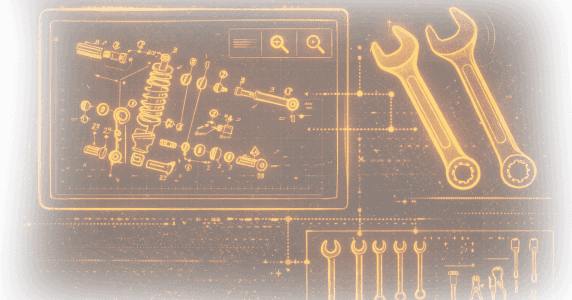
  • Parts Diagrams at Your Fingertips

    Clean, zoomable factory diagrams. Find the part, see where it goes, know what’s around it. No more squinting at photocopies.

  • Diagnose & Repair, the Factory Way

    Describe the symptom and get a single, proven path from the factory service manual with step-by-step instructions, the tools you’ll need, and the exact fix with torque specs.


  • A Veteran Mechanic’s Library in Your Pocket

    Torque specs, clearances, service sequences, and special notes pulled straight from the factory manuals. No more digging through greasy pages or hunting through PDFs.

  • Upload a Photo. Get the Right Answer.

    Not sure what you’re looking at? Snap a picture and ShopDog will identify the part — before you start turning the wrong bolt.

  • Parts Diagrams at Your Fingertips

    Clean, zoomable factory diagrams. Find the part, see where it goes, know what’s around it. No more squinting at photocopies.

  • Diagnose & Repair, the Factory Way

    Describe the symptom and get a single, proven path from the factory service manual with step-by-step instructions, the tools you’ll need, and the exact fix with torque specs.


  • A Veteran Mechanic’s Library in Your Pocket

    Torque specs, clearances, service sequences, and special notes pulled straight from the factory manuals. No more digging through greasy pages or hunting through PDFs.

  • Upload a Photo. Get the Right Answer.

    Not sure what you’re looking at? Snap a picture and ShopDog will identify the part — before you start turning the wrong bolt.

  • Parts Diagrams at Your Fingertips

    Clean, zoomable factory diagrams. Find the part, see where it goes, know what’s around it. No more squinting at photocopies.

Don’t take our word for it.

Don’t take our word for it.

See ShopDog in Action.

See ShopDog in Action.

See ShopDog in Action.

Most likely causes

Most likely causes

Likely causes

Adjusting clutch when engine is cold

Not using correct primary Oil

Over-tightening clutch cable

Common mistakes

Common mistakes

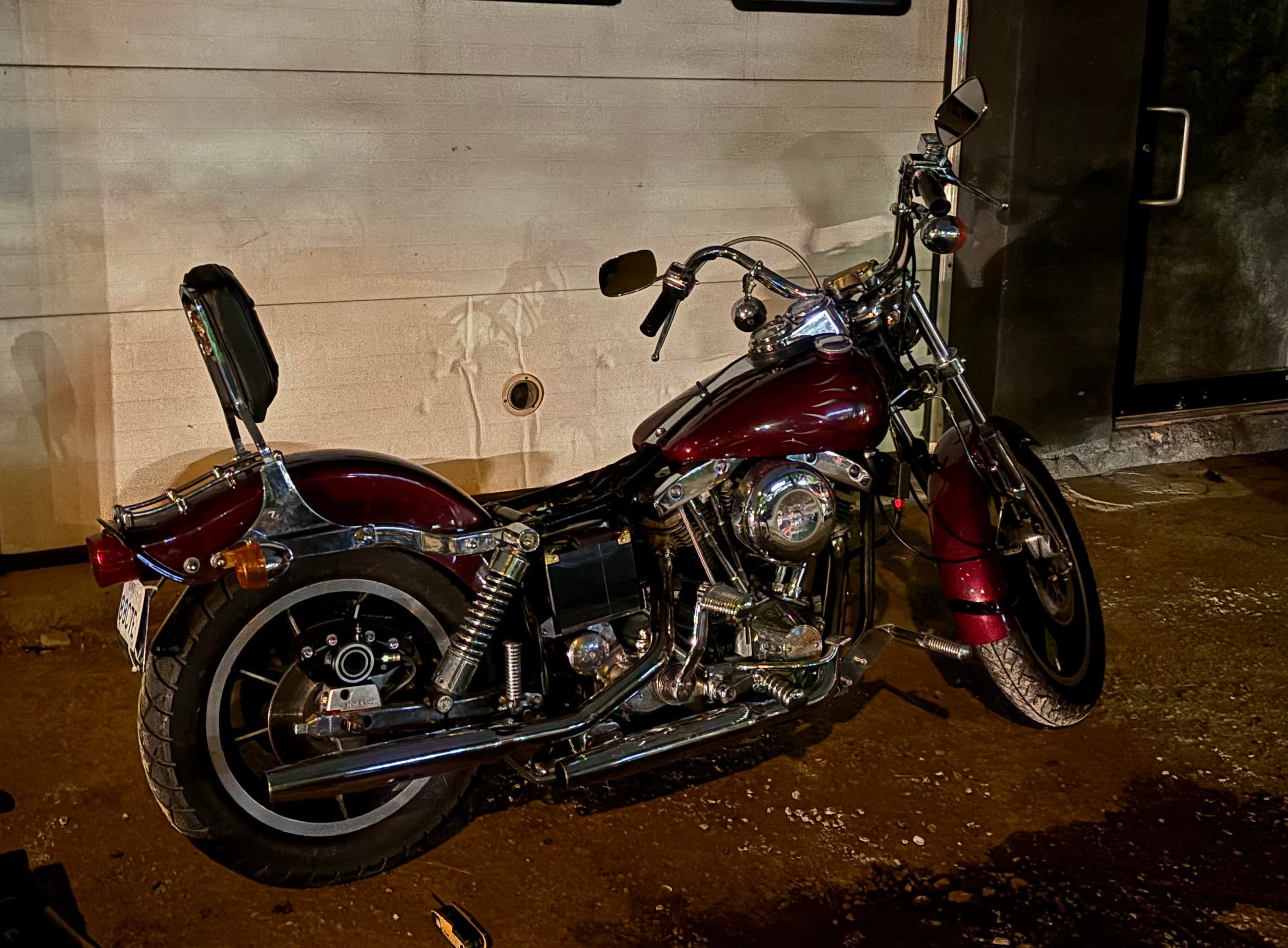
I'm having trouble shifting into neutral when my 1979 FXE is running, but as soon as I turn the bike off I can easily shift to neutral. Help me diagnose and fix this.

I'm having trouble shifting into neutral when my 1979 FXE is running, but as soon as I turn the bike off I can easily shift to neutral. Help me diagnose and fix this.

Ask ShopDog

Ask ShopDog

Ask ShopDog

Chat

Chat

Chat

If you can’t find neutral while the engine is running, but neutral is easy to find with the engine off, it almost always means that the clutch is not fully disengaging.


In other words: even with the lever pulled in, the clutch drags slightly which loads the transmission and makes neutral hard to catch.


Here is why this is likely happening:


1. Clutch Cable Free Play

You should have about 1/16" to 1/8" free play at the clutch lever. (Too much or too little free play will prevent full disengagement)


2. Clutch Release Mechanism Adjustment

This is done at the clutch release screw in the primary. A misadjusted screw can leave the clutch slightly engaged.


3. Clutch Plates Sticking

If your bike sits a lot or the primary fluid is dirty or incorrect, the plates may be sticking.


The first issue is the most common so let’s set the clutch cable free play first and see if it solves the problem.

If you can’t find neutral while the engine is running, but neutral is easy to find with the engine off, it almost always means that the clutch is not fully disengaging.


In other words: even with the lever pulled in, the clutch drags slightly which loads the transmission and makes neutral hard to catch.


Here is why this is likely happening:


1. Clutch Cable Free Play

You should have about 1/16" to 1/8" free play at the clutch lever. (Too much or too little free play will prevent full disengagement)


2. Clutch Release Mechanism Adjustment

This is done at the clutch release screw in the primary. A misadjusted screw can leave the clutch slightly engaged.


3. Clutch Plates Sticking

If your bike sits a lot or the primary fluid is dirty or incorrect, the plates may be sticking.


The first issue is the most common so let’s set the clutch cable free play first and see if it solves the problem.

ShopDog’s Diagnosis

ShopDog’s Diagnosis

Your Questions

Your Questions

Fix the problem.

Fix the problem.

Then find the right parts and stay ahead of the next one.

Then find the right parts and stay ahead of the next one.

Then find the right parts and stay ahead of the next one.

Let ShopDog Chase Down the Parts

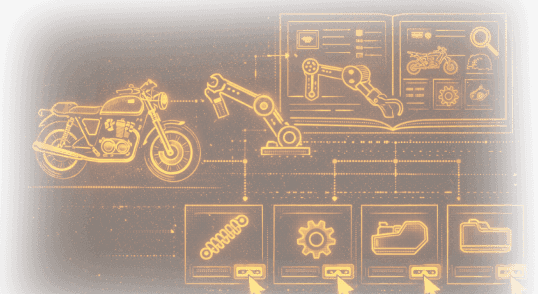
Skip the wrong orders and returns. ShopDog uses the factory parts book to surface the right OEM part numbers with links to buy them.

VISUAL IDENTIFICATION

Never Lose Track of Maintenance Again

One system for every bike you own: schedules, interval-based reminders, step-by-step service guidance, and parts sourcing. All in one place.

SMART PARTS SEARCH

Built for the Most Loved Vintage MotorCycles

Built for the Most Loved Vintage MotorCycles

Harley-Davidson

Harley-Davidson

All Classic Harley Models:


  • Knucklehead (EL, FL)

  • Panhead (EL, FL, FLH)

  • Shovelhead (FLH, FX, FXE)

  • Ironhead Sportster (XL, XLH, XLCH)

  • Evolution Sportster (XLH 883, XLH 1200)

  • Evolution Big Twin (FXR, FXST, FLST)

Triumph

Triumph

Classic pre-2000 Triumphs:


  • Bonneville T120

  • Bonneville T140

  • Tiger TR6

  • Trident T150

  • Trident T160

  • Thunderbird 6T

  • Daytona T100R

  • Trophy TR6

  • Tiger T100

BMW

BMW

Most R-series “airheads”:


  • R50/5 & R60/5 (500-600cc)

  • R75/5

  • R90/6 & R90S

  • R100 series (R100/7, RS, RT, S)

  • R80 series (R80, RT, G/S, GS)

  • R65

Japanese

Japanese

Classic Japanese Big Four


  • Honda CB series, CX500, Gold Wing GL1000/1100

  • Yamaha XS twins, SR thumpers, RD two-strokes

  • Kawasaki Z/KZ fours, H1 & H2 triples

  • Suzuki GS fours, GT triples


*Pre-1985*

We're building ShopDog right now.

We're building ShopDog right now.

Join the waitlist and help shape what it becomes.

Join the waitlist and help shape what it becomes.

Join the waitlist and get 3 months free when ShopDog launches.

Get 3 months free when ShopDog launches.

Get 3 months free when ShopDog launches.

2026 © All Rights Reserved

2026 © All Rights Reserved

2026 © All Rights Reserved